Jan 16, 2026
An Introduction to AI Sales Assistants
The daily reality for many sales teams involves a constant struggle against the clock. Leads come in, but the pressure to respond quickly, qualify accurately, and follow up consistently means that the opportunities often slip away. When a prospect reaches out, they expect an immediate, informed reply. If they do not get one, they move on. This happens because manual processes have limits, not because of a lack of effort.
An AI Sales Assistant is a system designed to remove these limitations. It handles the critical, repetitive tasks that consume a sales representative’s time. It identifies what a prospect wants, understands the context of their request, and takes the steps needed to move through the early stages of the funnel.
The Core Value: Speed, Accuracy, and Focus
Integrating an AI assistant into your sales workflow provides immediate, measurable benefits that directly impact your bottom line.
Instant Speed and Responsiveness
In sales, speed is the difference between a new customer and a lost opportunity. High-Intent leads are actively researching solutions, and the first company to engage them meaningfully often wins the business. Sales representatives, however, are often tied up in meetings, traveling, or focused on complex deals. This leaves a gap where new leads go cold.
An AI Sales Assistant closes this gap by engaging prospects instantly, 24 closes this gap by engaging prospects instantly, 24 hours a day, seven days a week. It ensures that every inquiry receives a timely and intelligent response, qualifying the lead and gathering necessary information promptly.For businesses operating on platforms like WhatsApp, this instant engagement is crucial. Thaiger AI's AI WhatsApp Integration ensures that this initial, high-stakes interaction is handled perfectly every time, preventing missed opportunities.
Precise Lead Qualification and Prioritization
Not all leads are created equal. Some are simply browsing, while others are ready to buy now. Manually sorting through a high volume of inquiries to find the high-value prospects is inconsistent and time-consuming.
AI Sales Assistants analyze prospect behavior and conversation data in real-time to score and prioritize leads. If a prospect asks about pricing, specific integrations, or responds quickly to follow-up questions, the AI recognizes these buying signals and flags the lead as high-priority. This allows human sales representatives to focus their energy on the prospects most likely to convert. To understand how this process works, read more about Lead Scoring in 2025.Scaling Sales Without Expanding Headcount
Growth typically requires hiring more Sales Development Representatives (SDRs), which increases overhead costs and requires significant time for recruitment and training. An AI Sales Assistant offers a different path to scale.
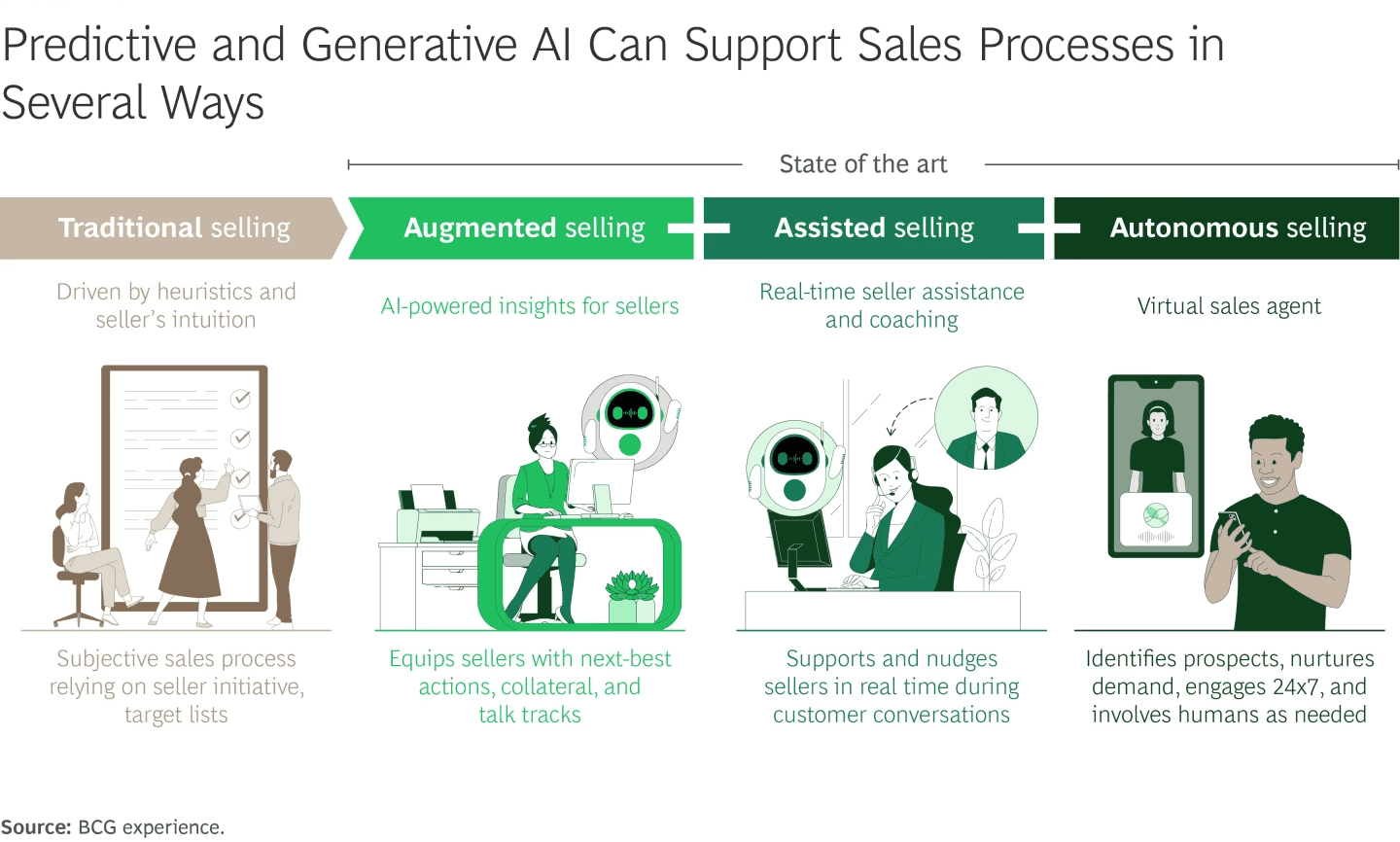
By automating lead qualification, initial engagement, and follow-up sequences, the AI assistant absorbs the increased workload that comes with a growing lead volume. This means your existing sales team can handle a significantly larger pipeline without becoming overwhelmed. The result is a scalable model where revenue grows without a proportional increase in payroll. This shift toward automation is part of a larger trend where AI agents will automate execution and orchestrate scale in B2B sales, as noted by BCG research.
The FazWaz Premium Case Study
The power of an AI Sales Assistant is best illustrated by its real-world impact. Thaiger AI partnered with Fazwaz to reactivate their existing database of contacts for the FazWaz Premium Service. The goal was to efficiently identify and engage high-intent sellers who were ready to list their properties. The results from the first 24 hours demonstrate the immediate, high-volume impact of AI-Drive outreach.
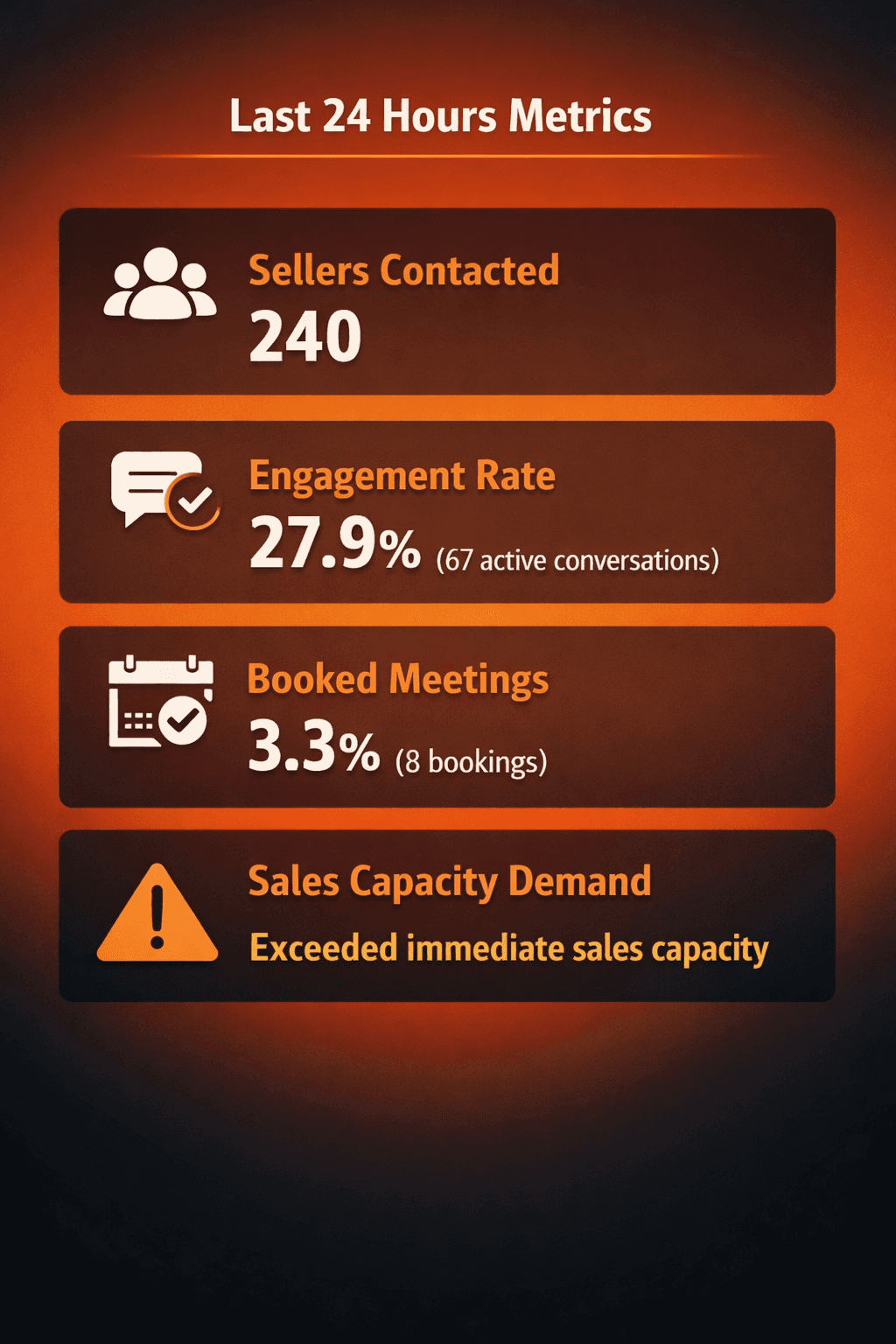
This case study highlights how AI not only accelerates engagement but also provides clear signals for optimizing sales operations as demand scales.
Ready to See the Impact on Your Sales Pipeline? The most effective way to understand the value of an AI Sales Assistant is to see it applied to your specific business challenges. If you are ready to stop losing leads to slow response times and start focusing your sales team on closing deals, we should talk. Book a call with Thaiger AI to discuss your sales automation strategy.
The Shift from Manual to Intelligent Sales
The difference between a manual sales process and one powered by an AI assistant is a fundamental change in efficiency and data quality. When sales representatives are busy, updating the Customer Relationship Management (CRM) system is often neglected. Notes are skipped, statuses are outdated, and valuable interaction data is lost. This leads to inaccurate forecasts and missed follow-ups.
AI Sales Assistants fix this problem by automatically logging every interaction—from a WhatsApp message to a scheduled meeting—directly into the CRM. This ensures the sales pipeline is always accurate, providing clear visibility into which leads are active and which deals need attention.
This focus on automation and data accuracy is why analysts estimate that generative AI could open up an incremental $0.8 trillion to $1.2 trillion in productivity across sales functions globally, according to McKinsey. Here are the top use cases they mention:
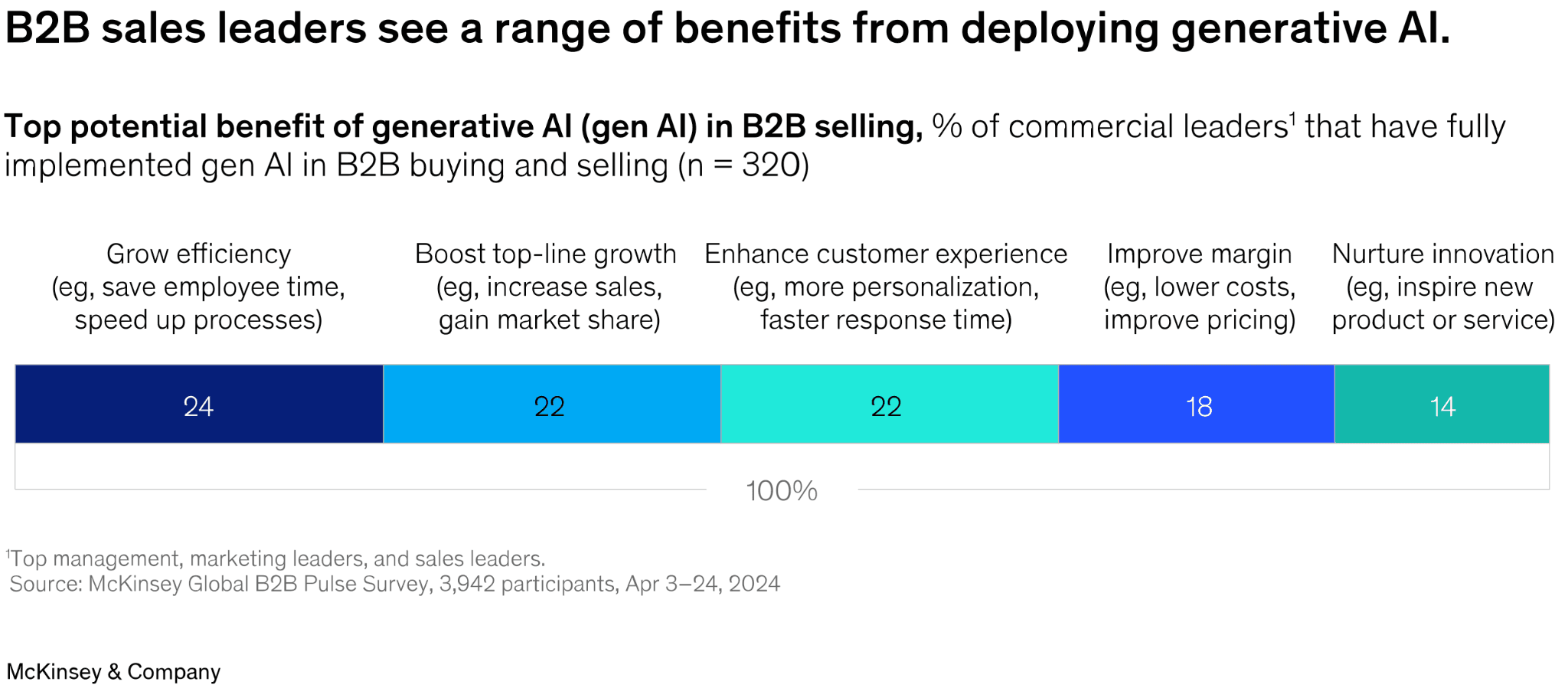
This comparison highlights where AI-powered sales assistance changes day-to-day execution.
Feature | Manual Sales Process | AI-Powered Sales Assistant |
Response Time | Minutes to hours (limited by human availability) | Instant (24/7) |
Lead Qualification | Inconsistent, based on human judgment and time | Real-time, data-driven scoring and prioritization |
Follow-Ups | Often delayed or forgotten; requires manual effort | Automated, personalized, and triggered by prospect behavior |
CRM Data | Prone to human error and incomplete updates | Automatically logged and updated in real-time |
Scalability | Linear (requires hiring more staff to handle more leads) | Exponential (handles massive lead volume without added headcount) |
Beyond the Assistant: Autonomous Agents
The AI Sales Assistant is the first step toward a fully optimized sales environment. The next evolution involves AI Autonomous Agents. These agents are capable of handling more complex, multi-step tasks, effectively automating entire segments of the sales cycle. They are not just tools; they are digital team members that manage workflows, orchestrate communications, and continuously learn to improve performance.
The shift to AI-powered sales is not a future trend; it is the current reality for businesses gaining a competitive edge. By integrating an AI Sales Assistant, you move your team away from administrative burden and toward strategic relationship-building and closing deals. Modern B2B sales teams use these tools to win more deals and keep their pipelines organized.
If you’d like to learn more and see how Thaiger AI can support your sales operations, you can:
Articles